


With the unexpected eruption of COVID-19, the world has changed for good, and so are the businesses, – precisely the way the business processes are organized. Digital transformation that has already started some time ago has significantly accelerated. For instance, artificial intelligence and machine learning have exploded within past months, and so, currently, the army of trained AI bots are answering customers’ inquiries on a daily basis.
The financial domain is also adapting to a rapidly-changing era and is integrating new technologies into its operation. The appearance of FinTech startups in the market and the significant amount of money invested in them (according to the Crunchbase data, by the end of the first quarter of 2020 $107.9bn was invested in the FinTech industry), raise the question of the future of banking technology.
FinTech has already disrupted the way we make transactions as well as how we do business, take loans, etc. It provided us with mobile banking, Insurtech solutions, crowdfunding, -and these are less strong points in the traditional banking system.
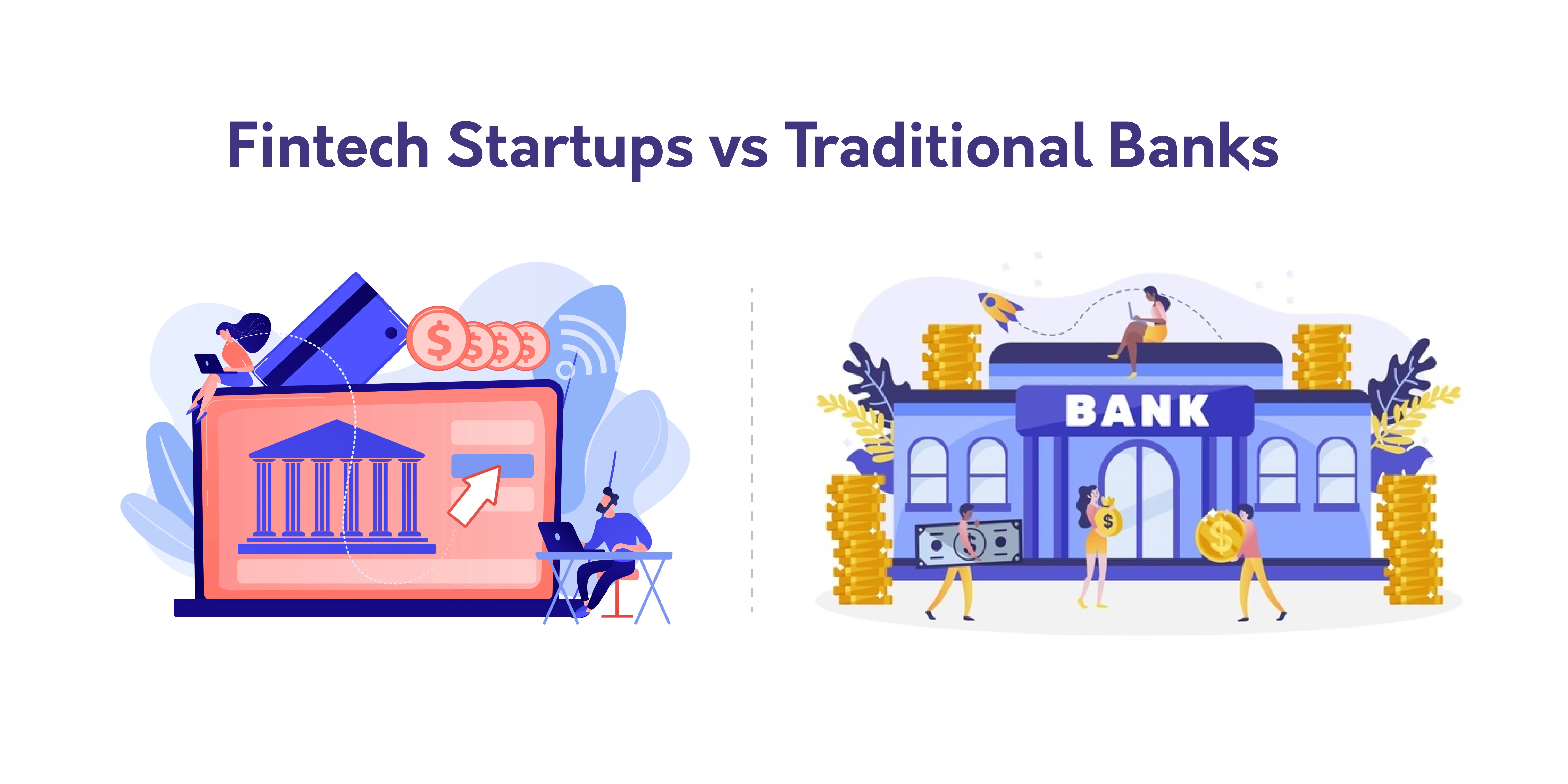
Does it all mean that fintech innovation will completely change the future of banking? Will these financial players end up being competitors or partners?
In the article, we’ll cover the following points: traditional banks and digital transformation; the way fintech challenges the financial system; technologies that influence the banking system; banks and innovation.
Are banks prepared for the digital transformation?
Digital transformation in the banking sector implies multiple changes for better process optimization, automation as well as an increase in data safety. But how well are banks prepared for such transformation?
According to the Future of Finance report by Goldman Sachs, one-third of the Millenial group think they will not need a bank in the next five years. And this group is already becoming game-changers in the market. This is the generation that values simple, innovative, and convenient things, and, thus, forces companies to reshape the way they conduct business.
Whether or not we take into account Millenials, businesses cannot bypass innovation. And we can see that the banking system has already changed in the following ways:
- adoption of digital workplaces
- implementation of digital tools that enable internal collaboration
- adoption of artificial intelligence (AI)
- implementation of online payment
- mobility and offer personalization
Banks realize the importance of keeping up with the time trends and developments and take into account contemporary challenges.
For example, moving online was a strategic and profitable move for banks. But if you’re online doesn’t mean you understand how it all should be done properly and efficiently. And at this point banks have to deal with a lot of challenges.
Fintech, on the other hand, understands customers better and has the right online strategy. Innovative fintech startups are already challenging a traditional banking system by implementing disruptive technologies and making the payment process much easier and customized.
Yet, digital consumers have higher expectations than ever before these days, and fintech solutions might not solve all the problems the customers are facing, especially when it comes to the rise of cybercrimes.
When coming to the question if fintech products will completely replace banks, there are polar points of view on the subject.
-
There’s a possibility that FinTech will completely replace banks.
At first, this idea sounds bold and utopian, but the raise, popularity, and investment flow into fintech show otherwise.
These days more and more businesses turn to fintech to enable such important features as contactless payments, e-commerce transactions, and so on. Fintech startups focus on rethinking how technology can be used in finance and banking. So, receiving easy credit or capital investment for the startup at zero cost might as well become a new reality.
Basically, Fintech has evolved into being a cheaper alternative to the bank. New Fintech companies take into account all the challenges of today’s world and come up with the best possible solutions, while traditional banks are slower in responding to the rapidly changing environment, and so there’s a possibility that fintech will completely replace the banking system.
-
Banks and FinTech startups will build a bold partnership
Even though fintech startups take into account all the customers’ pains when it comes to finance, banks have been on the market for much longer, and there is an established trust bridge between the customer and the banking system.
The functioning banks are also smart enough not to miss out profitable opportunities. They might not respond to the current ever-changing situation as quickly as fintech startups do, but they are also not dragging behind technological progress and innovation.
Banks are investing in fintech, and some of the world’s famous institutions now have their own fintech under their wing. For example, Capital One created fintech-infused banking cafes to cater to a younger generation of customers.
So, banks and fintech startups might as well unite their endeavors in order to create even better customer experience and come up with the best financial solutions for businesses and individuals.
How does FinTech challenge the financial system?
The Fintech revolution has already started and it’s not going to stop any time soon. Fintech has expanded the ways financial operations are made while challenging the existing financial system in the following ways:
- Fintech companies give a cheaper and more convenient option compared with the traditional ways of making payments both for businesses and consumers.
- Fintech responded quickly to the rise and popularity of crowd- funding platforms and campaigns. As a result of crowd-funding, new small businesses found their way into the market, and they don’t have to take loans and pay interest rates as in traditional banking.
- Fintech has already become a big part of your personal and professional activities, even when you don’t fully realize it. Just think about how often you perform cashless operations on a daily basis. According to Ernst and Young’s 2019 Global FinTech Adoption Index, the adoption rate of fintech is more than two-thirds (64%) globally.
But since Fintech is a relatively new phenomenon as compared to a traditional banking system, it has to deal with some risks and challenges as well. Among the major risks are:
- privacy and data breach
- terrorist financing and money laundering
- reliance on process operated in another country during the cross-border transaction
- challenges for the companies to keep up with transaction speed
- absence of commonly applied standards in the Fintech industry
What emerging technologies became game-changing in banking?
Banking system can’t stand aside from the innovation and new emerging trends, especially when it faces rising competition from fintech startups.
So, let’s have a look at the technologies that continue influencing and changing the banking system.
-
Blockchain
Initially, blockchain has been used to support cryptocurrencies like bitcoin. But its implementation goes far beyond that. Basically, blockchain eliminates the need for third parties when the transaction is made. And even though it might seem as a disruption to the whole banking system, leading banks use this technology to reach new markets. Besides, the implementation of blockchain technology could help investment banks save a large sum of money by improving the efficiency of settlement systems.
-
Artificial Intelligence (AI)
Currently, AI is penetrating almost all business sectors, and the financial area is not an exception. The future of AI in banking has never looked better. When properly implemented, AI is one of the best tools to detect fraudulent transactions, to automate the majority of processes, and provide enhanced customer service.
-
Big Data
Proper use of data gives tons of advantages to the banks that implement it in practice. Data provide banks with relevant information about customers, their preferences, and give insight into their behavior, thus, helping in making customized banking solutions as well as analyze customer feedback effectively. Besides, big data analytics can be used to check what works and what doesn’t work in banking services.
-
Mobile
The rising popularity of smartphones has changed all the businesses, and the banking sector as well. Not to lose the customers, banks had to adjust to the mobile ”world” very quickly. So, currently, payments via smartphones is a common practice, and mobile banking is constantly improving with new additional functions.
Among other trends that impact financial sector are open banking APIs, hyper-personalization, and others.
How do banks implement new technology to stay innovative?
Banks are institutions with a rich history dated back centuries ago. But since this century brings a lot of rapid and fast changes, the banks have to respond to them to stay competitive and not to lose customers.
Digital transformation is not a matter of seconds, so these days banks are facing quite a lot of challenges, – and the biggest one is to figure out how to move away from their old legacy systems that have been in place for decades, and on which their entire operations rely on.
There are a few options for banks to consider when deciding how to implement new technology. One solution is to launch front-end applications for customers. Applications provide an easy, user-friendly interface that allows banks to stay relevant in the market. However, this option should be considered as a quick-fix while substantial back-end changes take place at a slower pace.
Another option is for banks to dedicate one team to maintain their legacy systems while another team develops a whole new system taking steps in implementing new technology to overhaul the entire operations of their business.
Larger banks can invest more in gaining and implementing new digital tools needed for better process optimization. Smaller banks can concentrate on particular niches where they would like to excel.
Cultivating technology-centric culture is also essential to stay innovative and in trend. It can be done by hiring CIO with vast software experience and creating a new technology-driven department that would also cooperate with other departments, thus, building a collaborative tech culture. It takes time and effort, but stagnation leads to decay and innovation – to prosperity.
So, a traditional banking system versus fintech startups: are they competitors or collaborators? It seems like sudden appearance of new fintech startups that quickly respond to customers’ needs urged banks to look around and speed up the inevitable process of digitalization. In this case, healthy competition can be viewed as a driver to success, as often the lack of a competitive atmosphere leads to obsoleteness.
Also, banks start cooperating with some fintech startups with the same goal in mind: providing better services, customer experience, and quick response to upcoming needs. So far competition between banks and fintech as well as cooperation between them only provided customers and businesses with better tools and a greater experience, -and as we are entering 2021, we’ll keep watching what changes are yet to come.
Subscribe


Thank you!
Get ready! You will receive handpicked content right to your inbox.