FinkaMetals – B2B Platform for Digital Metals Concentrate Trading
GeographySwitzerland
IndustryMining & Metals
ServicesDigital product development and blockchain solutions
Intro
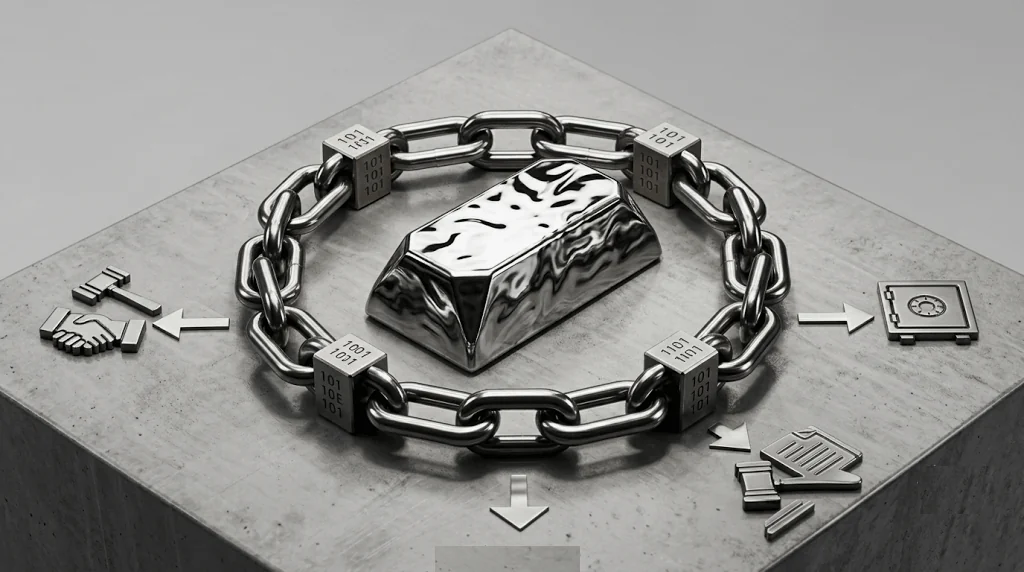
FinkaMetals is bringing structure to metals concentrate trading – a high-value market where trust, verified data, and timing define every deal.
The company is developing an institutional platform where verified companies can buy, sell, and trade metals concentrates through a more structured digital process. Instead of managing tenders, trade records, assay data, and settlement steps across disconnected channels, market participants get one tamper-proof environment where the key information behind each deal is easier to check, follow, and trust.
FinkaMetals’ ambition is bold: to give metals concentrate trading a trusted digital backbone. To bring this vision to life, the company works with S-PRO as its main technology partner and CoreLedger as the blockchain infrastructure partner behind the verifiable layer.
2019
year founded
12
metals and concentrate categories
3
core areas: tenders, verification, and settlement
Goals and Challenges
FinkaMetals needed to bring institutional-level trust and control into a complex, data-heavy trading process.
Three challenges shaped the product direction:
Fragmented trade information
Key trade data often sits across documents and communication channels. As a deal moves through tendering, verification, and settlement, records become harder to follow, and the full context can get blurred. For FinkaMetals, the challenge was to give companies a clearer way to understand where each deal stands and which information they can rely on.
Complex tender logic
Concentrate tenders are shaped by more than price. Multi-round bidding, treatment charges, payables, and changing commercial terms all affect how companies compare offers and make decisions. The product foundation had to reflect this industry logic in a way that would still feel clear for professional users.
Controlled participation for verified companies
Trust had to start before the first bid. FinkaMetals was built for verified companies, with KYB as part of the platform logic, so counterparty trust could not be treated as a later step. The challenge was to create a trading environment with clear roles, reliable company data, and traceable records.
Solution
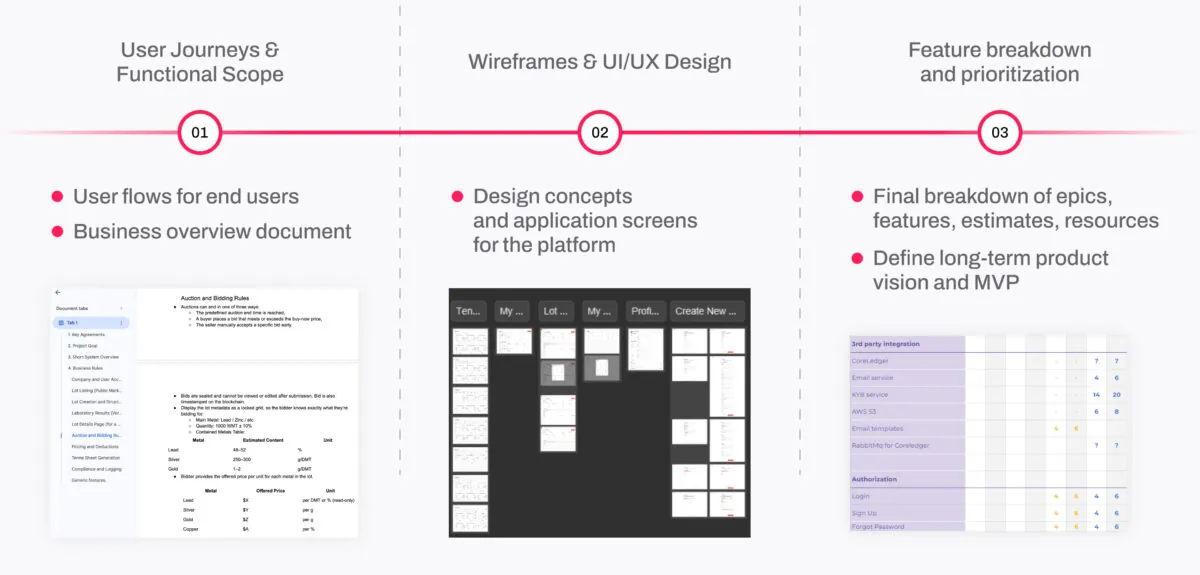
S-PRO supported FinkaMetals across two connected stages: the initial Launch Package and the following detailed discovery. Full-scale development started in February 2026, building upon these foundations to bring the product to life.
During this work, S-PRO defined the product logic, mapped the main user flows, prepared UX/UI designs, documented requirements, and shaped the technical architecture. The blockchain infrastructure side was supported by CoreLedger, while S-PRO kept the focus on turning the trading process into a clear product experience.
Together, these stages gave FinkaMetals a clear product and technical base for a platform where verified companies can manage tenders, bids, and trade records in one controlled environment.
Verified company onboarding
The trading process starts with company verification. Users register their company and complete KYB before gaining access to the platform’s core features. This gives FinkaMetals a controlled entry point and helps keep the marketplace focused on credible business participants.
Tender and lot management
S-PRO structured the product around tenders and lots, since this is where the trading process begins. This functional core was built upon the insights gained during the Launch Package.
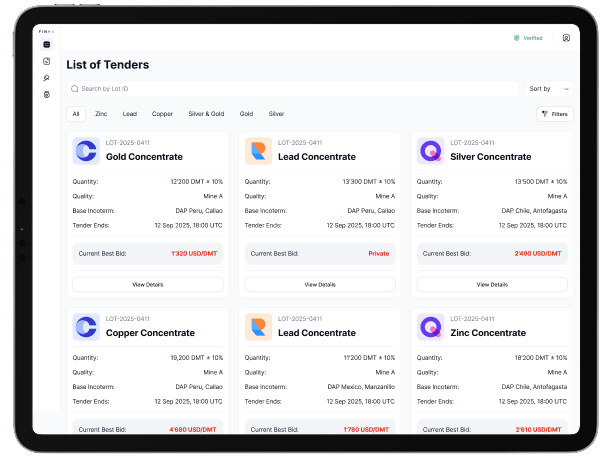
Users can browse tender opportunities, filter them by metal category, create new lots, review lot details, and track their own listings. Companies get a clear overview of open opportunities, active tenders, and pending action items.
Bid submission and review
The bidding flow had to reflect the way metal concentrate trading actually works. Users can submit bids, review bid details, and compare offers with the commercial context still visible. This helps professional users make decisions without reducing complex tender logic to a simple price field.
Lot details and trade data
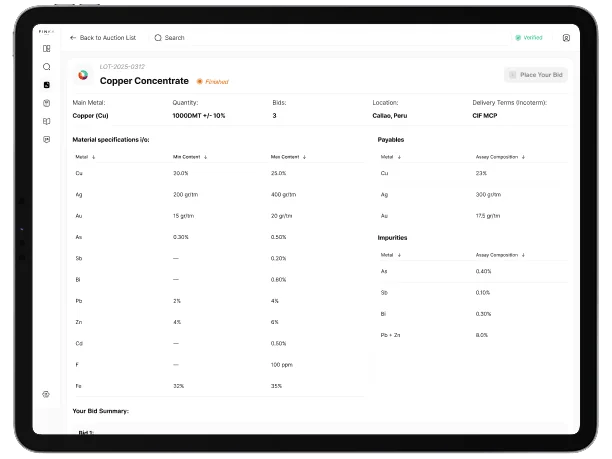
Each lot page brings the key trading data into one place: metal type, quantity, location, delivery terms, material specifications, payables, impurities, and bid status. This helps users review the commercial and technical context behind a deal before making or assessing a bid.
Trade records and deal visibility
Each lot carries the information behind the deal. The platform brings key records into the same product flow, including lot specifications, commercial terms, assay-related information, and delivery or payment-related updates. This gives users a clearer place to check what happened, what changed, and what still needs to be confirmed.
Technology
S-PRO designed a development-ready architecture for verified B2B trading, complex tender logic, and reliable trade records.
The architecture gave FinkaMetals a technical base where trading workflows, company data, user roles, and operational controls could work as one product.
Frontend: React-based web application for the platform’s user-facing trading flows.
Backend: Node.js application layer for business logic, tender workflows, bid flows, service integrations, and company data.
Admin layer: Operational interface for managing companies, users, roles, and platform activity.
Data layer and integrations: Database structure and external API connections for platform data, service integrations, and future product extensions.
Technical foundation: PRDs, BPMN flows, status diagrams, non-functional requirements, architecture diagrams, and research into lab result parsing and metals API integration.
Team
A focused cross-functional team guided FinkaMetals through discovery and development.
The project required close coordination between business analysis, design, architecture, engineering, QA, and infrastructure. Keeping these roles connected helped the team move from product decisions to implementation without losing context.
The S-PRO team included:
Project Manager
Business Analyst
UI/UX Engineer
Solution Architect
Backend Engineers
Frontend Engineers
QA Engineers
Infrastructure Engineer
CoreLedger’s team covered the blockchain infrastructure side, while S-PRO remained focused on the product.
Future Outlook
FinkaMetals is moving toward a market-ready platform for metals concentrate trading.
After the Launch Package and detailed discovery, the project moved into active development in February 2026. The core product direction is already defined, and the team is now working through the remaining scope: trading flows, user experience, and technical implementation..
The next stage is about bringing these parts together into a reliable B2B environment for verified companies. As FinkaMetals gets closer to launch, the goal remains clear: to introduce a more structured digital layer to a market where trust, timing, and verified information are critical.
FinkaMetals is set to launch in Q4 2026. Request early access today to be among the first to experience the platform.
Get in touch
Get in touch
Ready to discuss your project?
Share your ideas, findings, and questions with us. We’re excited to extend our expertise to your project. After form submission, we'll respond within 24h.